Homework Help Made Easy: Parent Toolkit for Study Habits
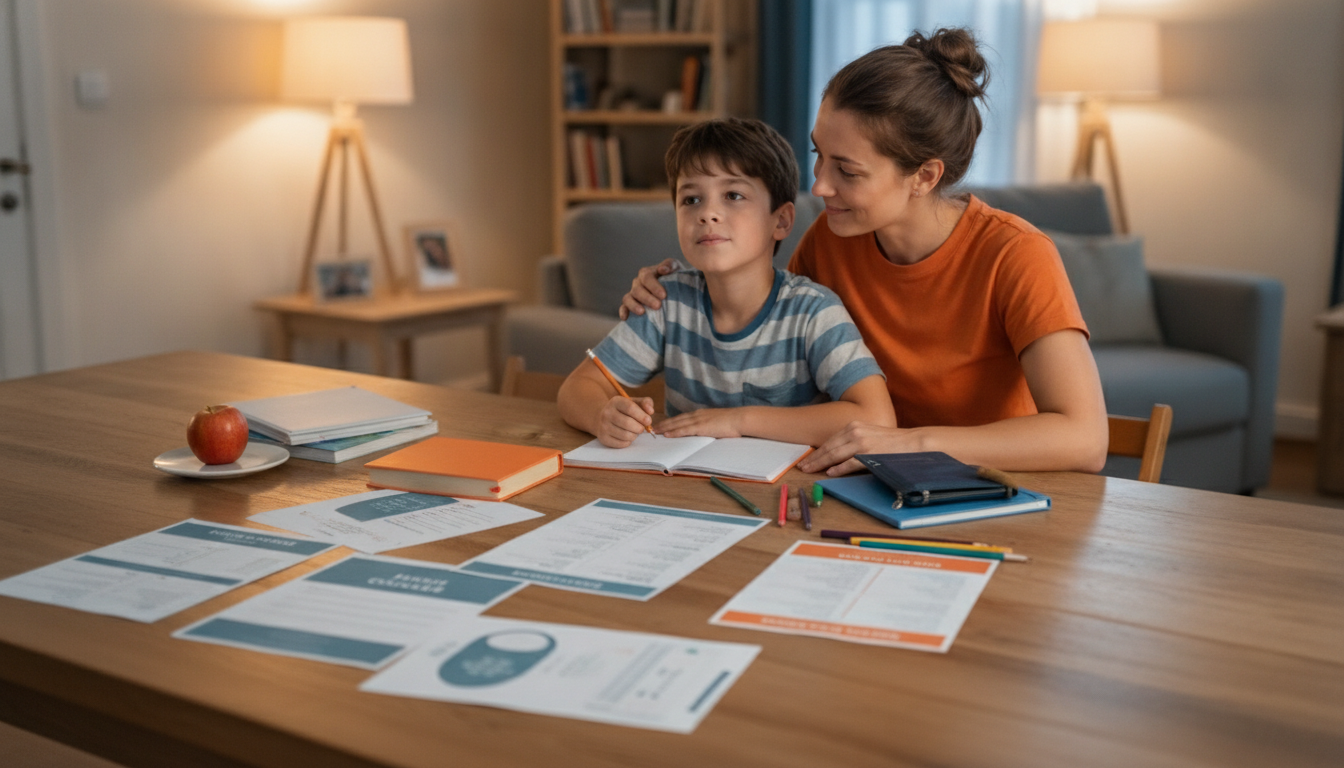
Homework Help Made Easy: A Parent Toolkit for Strong Study Habits and Independent Learning
Homework can feel like a daily power struggle—especially when kids are tired, parents are juggling work, and expectations are unclear. A “toolkit” approach turns homework into a predictable routine: the same steps, the same language, and simple printables that guide your child toward independence. The goal isn’t a perfect evening—it’s a repeatable process that lowers stress and builds skills your child can use long after tonight’s worksheet is finished.
Why homework becomes hard (and what actually helps)
Most homework struggles aren’t about motivation. They’re usually a mix of friction points that stack up at the worst time of day: unclear directions, low stamina after school, distractions, perfectionism, and parent-child role confusion (“Am I the teacher? The editor? The enforcer?”).
What helps most is shifting from policing to coaching. Instead of focusing only on correct answers, focus on the routine skills that create correct answers over time: planning, starting, checking, and turning work in.
- Use short routines that repeat daily. Consistency matters more than long sessions.
- Aim for gradual independence. Support decreases as your child shows mastery of the routine.
- Keep emotions low. Separate skill-building from discipline; homework is skills practice, not a character test.
For research-backed guidance on homework and healthy expectations, see the American Psychological Association’s tips for parents at APA: Helping Children With Homework.
Set up a homework routine that runs on autopilot
A dependable routine reduces decision fatigue. When kids know what happens next, they spend less energy resisting and more energy starting.
- Pick a consistent start time with a short after-school buffer (snack, movement, decompress).
- Create a “homework launch sequence.” Materials out, assignment list checked, timer set, distractions removed.
- Choose one study spot with predictable tools (pencils, charger, scrap paper, calculator, headphones if helpful).
- Use time blocks. Try 10–20 minute focus sprints with 3–5 minute breaks (adjust for age and attention).
- Add a closing routine. Quick review, pack backpack, file papers, reset workspace for tomorrow.
| Step | What to do | Why it works |
|---|---|---|
| Decompress (10–20 min) | Snack, water, movement, no screens if they derail focus | Reduces emotional spillover and improves attention |
| Plan (3–5 min) | List tasks, estimate time, choose the first small step | Prevents overwhelm and procrastination |
| Focus block (10–20 min) | Work on one task; parent stays nearby but not hovering | Builds stamina and self-starting |
| Quick check (2–3 min) | Self-check with a checklist; fix obvious errors | Improves accuracy without parent re-teaching |
| Pack & reset (3–5 min) | Put work where it belongs; prep materials for tomorrow | Prevents missing assignments and morning stress |
Study habits that stick: planning, starting, and finishing
When kids say “I don’t know what to do,” they often mean “I can’t find the first step.” A few micro-skills make homework feel doable.
- Planning skill: break tasks into “first tiny steps” (open notebook, write date, copy questions).
- Starting skill: use one consistent cue (timer, checklist, a quiet “start now” phrase).
- Finishing skill: define “done” (answered all questions, showed work, name/date, checked directions).
- Time awareness: ask for an estimate, then compare with reality to improve future planning.
- Weekly preview: glance at upcoming quizzes/projects and choose one small prep action.
For more on building study routines, HealthyChildren.org (American Academy of Pediatrics) offers practical guidance for families at American Academy of Pediatrics: Homework and Study Habits.
Homework strategies for tough moments (without taking over)
Kids learn independence when parents stay supportive without becoming the answer key. The difference is the kind of help you give: guidance that keeps ownership with the child.
For more evidence-based classroom-to-home learning strategies, Edutopia is a helpful starting point: Edutopia: Research-based study skills and learning strategies.
Build independence with the “gradual release” approach
What’s inside the Homework Help Made Easy Toolkit for Parents (printable support)
When homework routines live only in a parent’s head, kids depend on reminders. Printables put the routine on paper—so the tools do the “nagging,” not you. The Homework Help Made Easy Toolkit for Parents (printable guide) is designed to make homework steps visible and repeatable.
Pair it with stronger study skills for tests and long-term learning
For families who want structured support beyond homework time, pair the toolkit with the Study Skills Mastery Guide (learning strategies and focus tools). And for younger learners building comprehension and “learning stamina” through reading, the Educational Storybook for Growing Minds (reading with built-in lessons) can support calm daily reading habits that carry over into schoolwork.
FAQ
What if homework turns into arguments every day?
Lower the emotional temperature by using a short, repeatable routine with timed focus blocks and clear “done” criteria. Lean on coaching prompts and checklists so you’re guiding the process instead of correcting every answer.
How long should homework time be for elementary and middle school students?
A practical target is 20–40 minutes for many elementary students and 45–90 minutes for many middle schoolers, depending on school expectations and the child’s needs. Prioritize quality with timed sprints and breaks, and notice patterns—if attention collapses consistently, shorten the session and communicate concerns to the teacher.
How can parents help without doing the work?
Use guiding questions, model one example if needed, then have your child try the next one independently. Self-checklists and a “when I’m stuck” strategy keep ownership with the child while still providing support.












Leave a comment